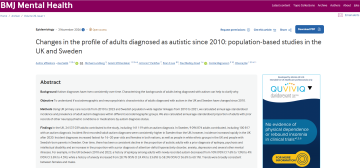
Adults diagnosed with autism today have very different health profiles than in 2010
The characteristics of adults diagnosed with autism have changed dramatically over the past decade, according to a new study led by researchers at the University of Bristol and the Karolinska Institute.
Published in BMJ Mental Health, the study analysed health records from millions of people in the UK and Sweden to understand how autism diagnoses in adults have changed since 2010.
Researchers found that autism diagnoses increased sharply over the study period, particularly among young adults aged 16 to 20, women, and people from White ethnic backgrounds. In the UK, new adult autism diagnoses rose more than tenfold, from 6 per 100,000 people in 2010 to 64 per 100,000 in 2023.
The study also identified major changes in the health conditions commonly seen before an autism diagnosis. Adults diagnosed more recently were much more likely to have a history of:
- Attention deficit hyperactivity disorder (ADHD)
- Anxiety or depression
They were also less likely to have previously been diagnosed with:
- Epilepsy
- Psychosis
- Intellectual disability
For example, in the UK, a history of anxiety among adults newly diagnosed with autism increased from 29% in 2010 to more than 58% in 2023, while a history of epilepsy fell from 10% to 4%.
Dr Aws Sadik, lead author, psychiatrist and GW4-CAT HP PhD Fellow, said:
“In light of these changes in autism diagnostic practice, we need to make sure that the needs of more vulnerable members of society are not obscured.
“This includes people from minority groups that are less likely to access autism diagnoses, as well as adults with intellectual disabilities, who now make up a smaller fraction of the population with recorded autism diagnoses.
“The move from a “diagnosis-dependent” to a “needs-led plus diagnosis” system, as recommended in the recent independent review into mental health conditions, ADHD and autism, may be a positive step towards this.”
While the study cannot explain the reasons behind the trends it has uncovered, the team says future research is needed to understand whether they reflect improved recognition of autism in previously underdiagnosed groups, changes in diagnostic practice, or a combination of both.
The study was funded by Wellcome, the Royal College of Psychiatrists, and the NIHR Biomedical Research Centre: Bristol.