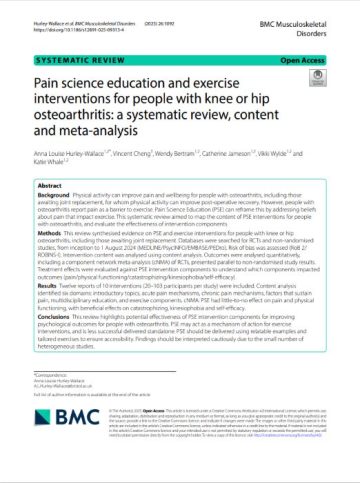
Can Pain Science Education help people with osteoarthritis? A review of the research
A recent review of Pain Science Education for people with knee or hip osteoarthritis found it may be able to help with some of the psychological impacts of pain. The review, by Bristol BRC researchers, is published in BMC Musculoskeletal Disorders.
Physical activity can improve pain and wellbeing for people with osteoarthritis. Despite this, many people with osteoarthritis aren’t very active. Sometimes this is because they believe the pain they feel when exercising is a sign that their joints are being damaged more.
Pain Science Education, or PSE, is a way of helping people understand that feeling pain doesn’t always mean that damage is being done, and that exercising with pain can be safe and beneficial.
Researchers reviewed studies of PSE for people with knee or hip osteoarthritis to find out:
- What it involved
- How effective it was
- How easily it could be tailored to different people
- What helped or prevented it being effective
They searched medical research databases and found 12 studies of 10 PSE programmes, with 20-103 participants in each study.
The review found PSE can help with some of the psychological impacts of pain, including:
- Preventing people expecting the worst from their pain
- Reducing fear of movement
- Improving people’s self-belief in their ability to be active
PSE was most effective when it was delivered alongside a programme of tailored exercises. Patients found PSE easier to follow when scientific topics were explained using examples relevant to their own experiences.
The review concluded more research is needed to design tailored, accessible PSE and exercise programmes, and evaluate their effectiveness.
Anna Hurley-Wallace, Senior Research Associate at the Bristol BRC and lead author of the review, said:
“The thought of doing physical activity can be off-putting for people with osteoarthritis, due to pain, and worries that they will ‘wear down’ their joints. Pain Science Education, when delivered with relatable examples, can change this mindset and increase individuals’ confidence to be more physically active.
“There is great potential here to improve pain and wellbeing for people with osteoarthritis, even for those who are waiting for a joint replacement.”