Study reveals unique stress hormone response in newborns undergoing heart surgery
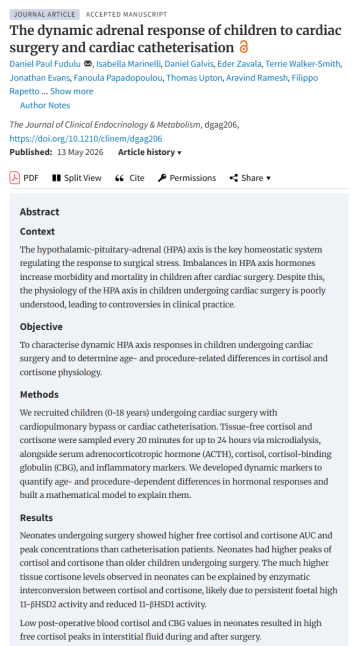
Findings from a study published in the Journal of Clinical Endocrinology and Metabolism could pave the way for safer, more tailored post-operative care for newborns with congenital heart defects. The research investigated the hypothalamic-pituitary-adrenal (HPA) axis – the body’s primary stress response system.
When a patient undergoes surgery, the HPA axis triggers the release of hormones like cortisol. This helps the body cope with physical trauma. Until now, the precise ways these hormones function in infants during surgery have been poorly understood, resulting in ongoing debates about how best to manage their recovery.
To understand this delicate balance, the research team recruited children aged up to 18 years who were undergoing either open-heart surgery with a cardiopulmonary bypass or a less invasive cardiac catheterisation.
Using advanced microdialysis techniques, the researchers measured active hormone levels in the patients’ tissue fluids every 20 minutes for up to 24 hours. Microdialysis is a minimally invasive technique used to monitor the chemistry of living tissue. It does not affect the circulating blood volume of children and neonates in particular.
The team discovered that neonates (newborn infants under 30 days old) have a different physiological response compared to older children. Neonates undergoing major surgery experienced surges of free cortisol and cortisone in their tissues. Both hormones would reach higher peak concentrations than they would in older children, or those undergoing minor catheterisation procedures.
The research team suggests this could be due to enzyme activity in newborns continuing to follow patterns present while they were still in the womb. This activity prevents them from regulating cortisol in the same way adults do. Combined with low levels of protective blood proteins after surgery, stress hormones are easily released into a baby’s vital tissues.
Daniel Paul Fudulu, Consultant Senior Lecturer in Adult Cardiac Surgery and corresponding author, said:
“Our study is the first high-resolution analysis of stress physiology in children undergoing cardiac surgical interventions. It demonstrates that newborns are physiologically distinct from older children. These differences mean that cortisol thresholds used to define adrenal insufficiency in older children should not be applied to neonates in the peri-operative setting. A one-size-fits-all approach is therefore inappropriate.
“We need more research to better understand HPA axis function in this vulnerable patient group. Neonates require tailored approaches to both diagnosis and management, with thresholds for deficiency and supplementation likely to differ significantly from those relevant to older children.”