
Improving research participation for children and young people through co-design
In this blog, Jacqueline Miller writes about how child-friendly features were embedded in the Ci2i project from the start, the philosophical approaches that underpinned this work and the factors that influenced children’s and young people’s experiences of the research.
Children and young people (CYP) are increasingly included in health research, yet their lived experiences of participation remain underexplored. The Ci2i project addressed this gap by asking a simple question: what is it really like for children and young people taking part in eye and vision research – and how can we improve it with them, not for them?
Respecting children’s rights
The project respected the right of young people to be heard and influence research that affects them. It was underpinned by two philosophical approaches:
- Critical realism — helps researchers look beneath the surface of experiences to understand the structures or mechanisms shaping children’s and young people’s experiences
- Contextualism — reminds us that knowledge is constructed together, through the context of relationships and interactions
Shaping study methods
The research team used Experience-Based Co-Design (EBCD) methods to ensure a participatory approach. This approach harnesses lived experiences to bring about quality improvements.
EBCD is flexible and worked well when children and young people were involved. With input from young advisors, the team embedded child‑friendly features in the study design. For example:
- Young interview assistants to ensure interviews had a more relaxed, peer‑to‑peer feel
- Emotion cards to help children and young people express how they felt during their experiences
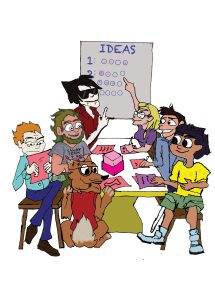
- Creative activities to make participation more accessible and engaging for children and young people
- Feedback spaces solely for children and young people, to reduce any power dynamics with adults
These features helped children and young people feel more comfortable, improved the quality of the data, and reduced the inherent power imbalance that exists between adults and children.
What we found
Qualitative analysis revealed that children’s and young people’s experiences were shaped by several interacting factors:
- Relationships – the complex dynamic between staff, parents, and children and young people
- Information – whether information was understandable, timely and relevant to what children and young people and their parents wanted to know
- Engagement with motivations – experiences were shaped by the extent to which children and young people were told what difference their participation had made (for themselves and others)
- Organisation – whether studies were designed and delivered with children and young people in mind
- Environment – how child‑friendly the research settings were
Using a behaviour-‑change approach, the team turned these insights into four co‑designed interventions to improve eye and vision research experiences for children and young people.
Key learnings
Three key lessons emerged from our work:
- A clear philosophical approach strengthened our methods and understanding of results
- Co‑design improved both the ethical and scientific quality of the research
- Creative, flexible qualitative methods were essential for hearing authentic perspectives from children and young people
Why this research matters
This project showed that grounding qualitative research in theory and doing it in partnership with children and young people can lead to improvements in how their needs are reflected, with outcomes that can be used in real research settings.
Acknowledgements
The Ci2i project is funded by the National Institute for Health and Care Research Biomedical Research Centre: Moorfields and conducted in conjunction with King’s College London.