
A world-first gene therapy for incurable kidney disease
A University of Bristol spin-out company is trialling the world’s first gene therapy for incurable kidney disease. The intervention could prevent kidney damage before it progresses and help an estimated 400,000 people worldwide.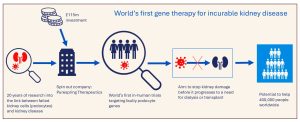
The challenge
Kidney disease affects 7M people in the UK and costs the economy £7BN a year (including £6BN in direct NHS costs). Without significant intervention, these costs could rise to £14BN and £11BN respectively by 2033.
Between 60-90% of kidney disease develops by damaging specialised kidney cell types called podocytes. When podocytes fail, protein leaks into the urine. This causes kidneys to scar and progresses patients towards needing either dialysis or a transplant due to kidney failure.
Our response
Over 20 years, Bristol Renal has been exploring how podocytes work, why they fail, and how to target them. In 2021, the team co-founded a University of Bristol spin-out company, Purespring Therapeutics, raising £115M from investors. This funded the manufacturing, safety, and regulatory work needed to move research from the laboratory into patients. The world’s first gene therapy clinical trial for kidney disease was a direct result of this work.
This first-in-human trial targets IgA nephropathy, a common cause of kidney failure, and is currently recruiting 9 patients at 6 centres in the UK and 3 centres in the United States. The aim is to stop kidney damage before it progresses to dialysis or transplantation.
Impact of this work
Across global markets, an estimated 400,000 people could benefit from the results of the trial. Within the UK, benefits would include:
- For patients, a one-off treatment could prevent a lifetime of dialysis and its impact on health and independence.
- For the NHS, preventing kidney failure could avoid the substantial, ongoing cost of dialysis and transplant care.
- For the UK economy, the work has already created 50 high-skilled jobs within a high-growth biotechnology company.
Going further
In addition, several other follow-on clinical programmes are well progressed. This includes a second clinical trial in the current commercial gene therapy pipeline, due to open in 2027. This trial will treat Alport Disease, the most common inherited kidney condition, caused by a faulty podocyte gene (42k pre-renal failure prevalent patients in UK/US/EU/Japan). So far, the candidate gene therapy drug has passed regulatory approvals, while national and international sites for patient recruitment are due to be set up.
Once clinical data and safety profiles are met for the first two programmes, additional programmes for other genetic conditions will follow in quick succession with the next round of capital funding being due in early 2027.