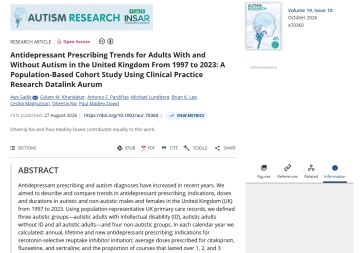
Antidepressant prescription numbers rising more rapidly for autistic adults
Antidepressant prescribing has increased more rapidly among autistic adults than non-autistic adults between 1997 and 2023. A new study led by researchers at the University of Bristol and NIHR Biomedical Research Centre: Bristol has found that in 2023, 30% of autistic adults were prescribed an antidepressant, compared with 7.9% of age and sex-matched non-autistic adults.
The study, published in Autism Research, analysed electronic primary care records from more than 34 million adults. Researchers compared data for autistic adults (with and without intellectual disabilities) to non-autistic adults matched for year of birth, sex and cohort entry year.
They found that prescribing rates had increased across all adults during the study period. However, the increase in prescription numbers was steeper among autistic adults.
The team also found that autistic adults were more likely to receive higher doses of commonly prescribed antidepressants and to remain on treatment for longer.
While prescribing rates were highest among autistic adults without intellectual disability, those with intellectual disability were most likely to stay on antidepressants for extended periods.
The research used data from the Clinical Practice Research Datalink (CPRD) Aurum database, covering more than 172,000 autistic adults and over 34 million non-autistic adults across the UK.
Dr Aws Sadik, lead author, psychiatrist and GW4-CAT HP PhD Fellow, said:
“Since 2016, national campaigns have sought to reduce overprescribing of mental health medications among autistic people.
“The increase we see in antidepressant prescribing may be explained by an increase in autism diagnoses among people with mental health conditions, such as anxiety or depression.
“Whether this is mainly due to changes in autism diagnostic practice or wider population trends in mental health is unclear.
“However, there is still limited evidence about how effective antidepressants are for autistic adults and how well they are tolerated.
“Our findings are particularly important because taking medication for longer and at higher doses may increase a person’s risk of experiencing negative side effects.”
The study team says more research is needed to understand why autistic adults are more likely to receive long-term antidepressant treatment and whether current prescribing patterns are delivering the best outcomes for patients.
They hope these findings will help inform future research into mental health care for autistic adults, including clinical trials to better understand the effectiveness and safety of antidepressants in this population.