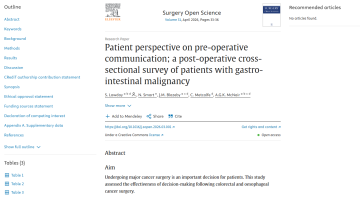
Patients felt well‑informed when undergoing gastrointestinal surgery, Bristol study finds
A study supported by NIHR Biomedical Research Centre: Bristol found that clear conversations before surgery were linked with:
- High confidence among patients about their decision to proceed with surgery
- Low decisional conflict regarding their choice
- High confidence that risks had been adequately explained
Researchers from the University of Bristol posted questionnaires to people who’d undergone surgery for colorectal or oesophageal cancer at the University Hospitals Bristol NHS Foundation Trust (UHB) and Gloucester Royal Hospital (GRH). They wanted to find out how patients felt about their decision to have an operation and the way risks were explained to them beforehand.
The team used well‑known patient‑reported measures:
- Decisional Conflict Scale (DCS) – how much doubt or regret someone has about a choice
- COMRADE scale – confidence in a decision and how well risks were communicated
- European Organisation of Research and Treatment of Cancer (EORTC) QLQ-PAL15 – quality of life
Overall, the study team found that regret was low, and confidence high among those who had chosen to have surgery.
People who stayed in hospital longer after surgery tended to report more doubt about their decision, and those with lower quality‑of‑life scores felt less confident. This suggests that post‑operative experience could shape how patients look back on discussions they had before surgery.
Patients with higher educational attainment reported less decisional conflict.
Sam Lawday, corresponding author, said:
“Going ahead with cancer surgery is a big decision, and the risks and trade‑offs can be daunting.
“Our findings suggest that most people felt they had the information and support they needed before saying “yes” to surgery.
“This is good news for shared decision‑making and it points to where teams can go further: offering extra reassurance and follow‑up to those who have a tougher recovery or lower quality of life after surgery.”
The authors note that, as with many postal surveys, people who were too unwell or who had a very poor outcome may have been less likely to respond. That means the results could paint a slightly more positive picture than the whole patient group.