
South Asian community comes together to discuss prostate cancer and healthy ageing
More than 30 members of Bristol’s older South Asian community gathered in August for a special event focused on prostate cancer, physical activity, and healthy ageing.
The event was organised as part of a research project supported by the National Institute for Health and Care Research Biomedical Research Centre: Bristol (NIHR BRC: Bristol) titled Understanding how to improve outcomes for South Asian men with prostate cancer. It was delivered in partnership with community organisations Dhek Bhal and Age UK Bristol.
Prof Athene Lane started the event by raising awareness of prostate cancer risks and highlighting the importance of physical activity in supporting health and wellbeing after a cancer diagnosis. Researchers then shared findings from the exploratory phase of the NIHR BRC: Bristol study. The study explored factors that help or hinder physical activity among older South Asian men living with prostate cancer.
Understanding physical activity after prostate cancer
Prostate cancer is the most diagnosed cancer in men in the UK. Research shows that physical activity is associated with better health outcomes. It may also help reduce the risk of prostate cancer progression and death because of the disease.
However, we don’t know much about how older South Asian men with prostate cancer experience physical activity and the unique challenges they may face. The study examined these experiences through an intersectional lens. It considered the combined influence of:
- Age
- Ethnicity
- Cancer survivorship
- Other health conditions
- Socioeconomic circumstances
During the event, researchers presented study findings through talks and posters translated into Urdu and Punjabi.
The research identified seven key themes influencing physical activity among older South Asian men with prostate cancer:
- Cultural norms around ageing
- Work-life balance and financial pressures
- Chronic health conditions
- Recovery from prostate cancer treatment and pelvic health challenges
- Weather and use of parks and outdoor spaces
- Religion and community support
- Awareness of physical activity guidance
Participants described how physical activity was often viewed as part of work or manual labour rather than a separate activity undertaken for health. Many also highlighted how family responsibilities, employment, and financial commitments could limit opportunities for leisure-time exercise.
Men living with prostate cancer reported that urinary symptoms, limited awareness of pelvic floor rehabilitation, and inconsistent access to physiotherapy services could make it difficult to remain active. Community groups and faith networks were identified as important sources of support and encouragement.
Bringing research to life
The event also introduced attendees to the World Health Organization’s physical activity recommendations for older adults. These guidelines encourage at least 150 minutes of moderate-intensity activity each week, alongside activities that strengthen muscles and improve balance.
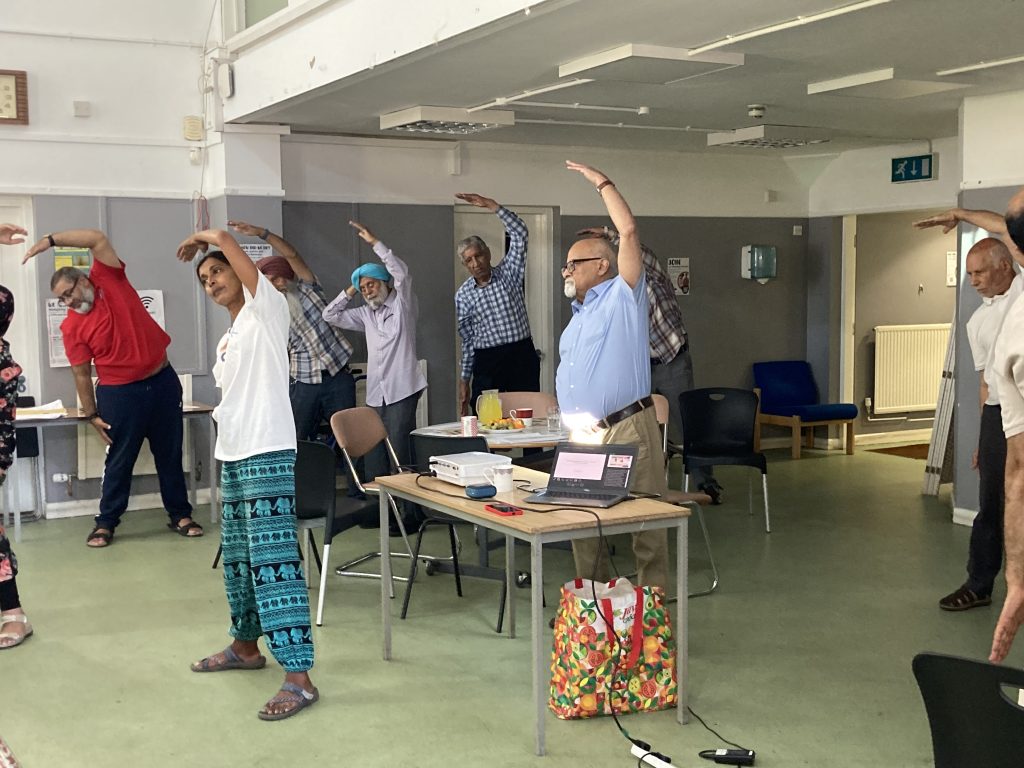
Following the presentation, Dr Subitha Baghirathan, Strength and Balance Coordinator at Age UK Bristol, led an interactive demonstration of strength and balance exercises. Many audience members enthusiastically joined in.
Dr Baghirathan said:
“I am always eager to lead demonstrations of Strength & Balance classes, to encourage a wider range of people to consider joining a local class or doing some exercises at home. It lifted my spirits to be back amongst Dhek Bhal, an organisation I have spent a lot of time with since 2014 when I began focusing on health equity work.”
The event also provided an opportunity for participants to reflect on attitudes towards ageing within South Asian communities.
One participant commented:
“For more older people, particularly in our wider South Asian community, there is this perception that when you get close to retirement or retire, that’s it, you’re done.”
Another added:
“In the South Asian community, elderly people are not involved in many activities because they think they are too old. They need motivation. When people get older, they should not think they are old. If they do, they may develop more health issues.”
Building partnerships for healthier communities
The event highlighted the strong partnership between researchers and community organisations. It did this by creating a welcoming environment where participants felt comfortable discussing health, ageing, and cancer.
Zehra Haq, CEO of Dhek Bhal, said:
“The recent co-design prostate cancer awareness workshop held on 11 August 2026 in partnership with Dhek Bhal provided an inclusive and supportive environment for men to learn more about prostate cancer, its symptoms and the importance of early detection.
“Participants found the workshop extremely informative and helpful. For many of the men attending, it was a real wake-up call, encouraging them to take a proactive approach to their health by contacting their GP and arranging a PSA blood test to check their prostate health.
“The safe and welcoming space created during the workshop enabled men to speak openly, share their thoughts and ask questions. This was particularly important given the sensitive nature of the topic, as it helped participants overcome any initial shyness or reluctance to discuss prostate health.
“At Dhek Bhal, we strongly value our partnership with the university. Working collaboratively allows us to break down cultural and personal barriers, increase awareness and encourage preventative health measures within our communities. Early awareness and detection are essential in helping men seek timely medical advice and reducing the risk of more complex health needs in the future.”
The event was very well received and sparked further discussions between Dhek Bhal and Age UK Bristol about developing future exercise opportunities for community members.
Dr Nour Alhusein, who led the research, said:
“It is inspiring to see the work Dhek Bhal does to support the communities it serves. I am particularly impressed by the way the organisation engages with research and helps translate findings into meaningful action. I was delighted to hear about plans to run exercise sessions at Dhek Bhal. To me, that reflects the ultimate aim of health research: helping people to be healthier, happier, better informed, and supported in their wellbeing.”
The research forms part of a wider programme of work seeking to develop culturally appropriate physical activity interventions for South Asian men living with prostate cancer. The ultimate goal of this work is to ensure future support is tailored to the needs and experiences of the communities it aims to serve.