Study reveals inequalities in eating disorder symptoms among UK adolescents
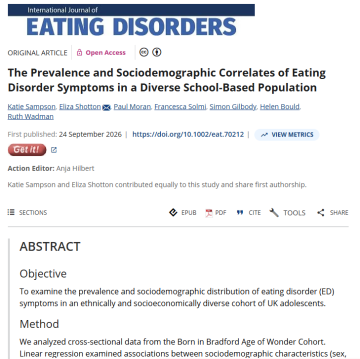
Nearly 1 in 10 adolescents may be experiencing elevated eating disorder symptoms, according to new research that highlights important differences in eating disorder symptoms across sex, ethnicity, gender identity and socioeconomic background.
The study, published in the International Journal of Eating Disorders, analysed data from more than 7,400 young people aged 12 to 15 taking part in the Born in Bradford Age of Wonder cohort. Researchers examined eating disorder symptoms reported by young people, including:
- Restrictive eating
- Binge eating
- Concerns about weight and shape
- Other behaviours linked to eating disorders
The researchers found that 9.5% of participants met the threshold for elevated eating disorder symptoms, suggesting they may warrant further clinical assessment. Girls were almost three times more likely than boys to report elevated symptoms, with around 1 in 7 girls affected compared with 1 in 20 boys. However, the findings also showed that eating disorder symptoms are not confined to groups traditionally considered at risk.
Gender-diverse young people reported particularly high levels of symptoms, with one-third meeting the threshold for elevated eating disorder symptoms. Adolescents living in the most deprived areas also reported higher symptom levels than those in the least deprived communities.
The study revealed notable differences between ethnic groups. Among girls, White participants reported higher symptom levels than Asian and Black girls. In contrast, Asian, Black and other ethnic minority boys reported higher symptom levels than White boys. Researchers say these findings challenge common assumptions about who is affected by eating disorders and underline the need for prevention and support strategies that reach a broader range of young people.
Weight and shape dissatisfaction was the most reported symptom, affecting around half of all participants. Researchers note that these concerns are a known risk factor for the development of eating disorders later in life.
Eliza Shotton, joint first author of the study from the University of York, said:
“Our findings show that eating disorder symptoms are common among young people and affect groups who are often overlooked.
“While girls had the highest overall symptom levels, we also found substantial numbers of boys, gender-diverse adolescents and young people from ethnic minority and socioeconomically disadvantaged backgrounds experiencing eating disorder symptoms.
“This highlights the importance of ensuring that prevention, early identification and support services are inclusive and accessible to all young people.”
The researchers say their findings highlight the potential role of schools in identifying young people who may be experiencing eating disorder symptoms, as schools provide an opportunity to reach adolescents from diverse backgrounds. They hope the results will help guide the development of more inclusive and culturally appropriate prevention programmes, particularly for groups that may face barriers to accessing support.
The study was supported by the NIHR Bristol Biomedical Research Centre, alongside funding from the NIHR Yorkshire and Humber Applied Research Collaboration and the NIHR Oxford Biomedical Research Centre.