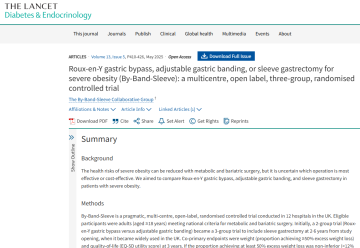
Adapting a randomised controlled trial to evaluate sleeve gastrectomy
Theme Surgical and orthopaedic innovation
Status: This project is complete
Evaluating new surgical procedures is difficult. This is because the surgical community often sees ‘new’ as ‘better’. This leads to procedures being used before we can assess if they are better and more effective. Patients are sometimes harmed because of this (if the new technique is less safe or as effective as a standard procedure).
Before our study, two international studies compared sleeve gastrectomy (a new surgical procedure) with gastric bypass surgery for people living with severe obesity. The results were inconclusive
A sleeve gastrectomy is a weight-loss procedure that removes part of the stomach and leaves a narrow, banana-shaped tube. At the time it was very popular despite a lack of evidence to support its effectiveness.
A gastric bypass (also known as a Roux-en-Y gastric bypass) is a weight-loss procedure that creates a small stomach pouch.
Project aims
Our aim was to evaluate if the new procedure (sleeve gastrectomy) was better than gastric bypass or gastric band.
To do this, we had to expand an existing trial to include 3 rather than 2 treatments. The sleeve gastrectomy procedure became popular once the original trial had already started. Starting another trial to assess this emerging procedure would have been time-consuming and financially inefficient.
Our work had to focus on expanding an existing trial without introducing bias into our study. This was an innovative approach as trials usually start and recruit patients to all treatments at the same time. We also aimed to ensure that procedures were conducted to a consistent standard
What we did
We expanded and adapted the existing two-group trial to include sleeve gastrectomy (and make it a three-group trial). We used three ways of measuring surgical quality by:
- Verifying and assessing the qualifications of surgeons taking part in the trial
- Monitoring and documenting the required and flexible components of the procedure
- Documenting reasons for cross overs between participant groups
What we found
We found that the new technique (sleeve gastrectomy) was less effective in terms of weight loss than the existing standard of care (Roux-en-Y-gastric bypass).
We found that standards of surgery were consistent across trial groups.
What next?
The next step is to follow up participants to see if differences are sustained.