Developing new virtual reality treatments for eating disorders
Theme Mental health
Workstream Psychological interventions
Status: This project is ongoing
Eating disorders are serious mental illnesses. They affect all ages and genders, most commonly adolescents and young adults.
Roughly a third of individuals with an eating disorder don’t fully recover. Some are unwell for 10 years or longer.
This makes it important to develop new treatments, to prevent eating disorders affecting young people’s physical, emotional, social, and educational development.
Project aims
The aim of this project is to develop new treatments for eating disorders using immersive virtual reality (VR). The treatments will be designed to address different aspects of eating disorders. These aspects have been selected with the help of patient and public involvement, engagement and participation (PPIEP) focus groups and existing evidence.
We will use the person-based approach to design and optimise these new treatments. The person-based approach is an evidence-based research method used for developing health interventions.
We will use feedback from people with lived experience to design, test, analyse and refine the new treatments. Their views and perspectives will be combined with existing research evidence. This will help ensure the intervention is as engaging and as effective as possible.
The interventions we design will be based around:
- A virtual cafe environment where people with eating disorders can practice scenarios they find challenging
- A gamified task aimed at retraining attention away from underweight bodies
- An intervention to explore inhabiting and viewing different versions of one’s body in VR
Our work so far
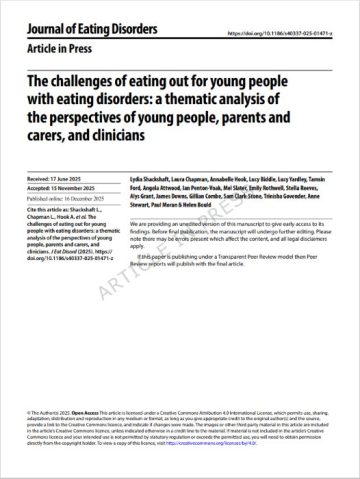
To design the virtual cafe environment, we first needed to understand the challenges people with eating disorders face when eating out.
We held interviews and focus groups with:
- 15 people, aged 14-25 years, with experience of eating disorders
- 4 parents and carers
- 6 healthcare professionals
Participants described cafés as difficult places where people with eating disorders face unexpected challenges. They may also experience intense difficult emotions, including feeling anxious, stressed and overwhelmed. The noise and busyness of the physical café environment contribute to these feelings.
Interactions with other people in cafés also pose a challenge. This includes fears of being judged on their appearance and food choices. Challenges around looking at menus with and without calories, choosing and ordering food, and actually consuming food and drink were also highlighted.
Despite common themes, challenges faced are individual and may depend on a person’s eating disorder diagnosis and stage of recovery.
What next?
We have used our findings to help us design a virtual cafe environment where people with eating disorders can practice scenarios they find challenging. We are now optimising our VR cafe.
What we hope to achieve
Our end goal is for our interventions to be used as part of treatment for people with eating disorders.
Would you like to take part in our study?
If you have an eating disorder, or have had an eating disorder in the past, you can apply to be part of our study and help us optimise our VR cafe.