My Hip Plan: Improving care for people having hip replacements
Theme Surgical and orthopaedic innovation
Workstream Interventions to improve patient outcomes after surgery
Status: This project is complete
Each year in the UK, over 100,000 people have a total hip replacement, a common and generally successful surgery. However, about 1 in 10 people are not satisfied with the results, and around 1 in 7 still experience pain afterwards. Many patients also face long waiting times, often over a year, and some have their surgery cancelled at short notice. This can be costly for the NHS and upsetting for patients.
Project aims
We created My Knee Plan to support people having knee replacements. In this project we adapted that plan as My Hip Plan for people having hip replacements, to help improve their experience and outcomes.
What we did
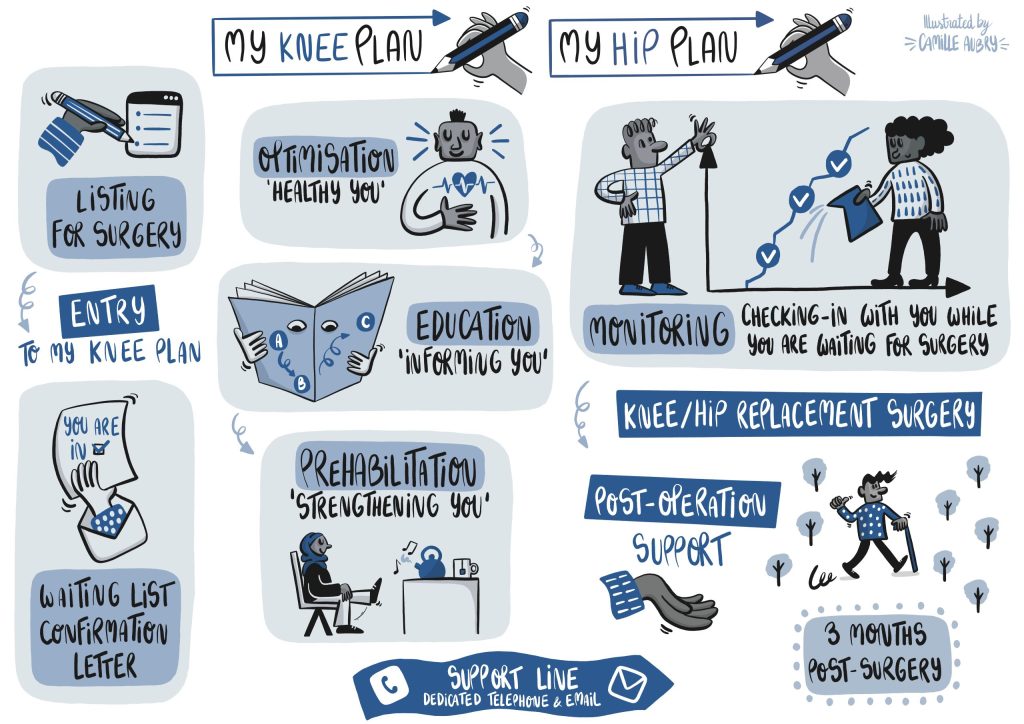
We adapted My Hip Plan from the existing My Knee Plan intervention. This is because many of the challenges faced by people awaiting hip replacement surgery are similar to those experienced by knee replacement patients.
To ensure the care pathway reflected the specific needs of hip replacement patients, our team:
- Reviewed evidence on factors influencing hip replacement outcomes
- Analysed NHS data on reasons for cancelled hip replacement operations
- Gathered feedback from patients about what support they considered important
- Identified priorities from members of the co-production group
We brought all this information together into a report to inform the adaptation process. The adaptation was guided by a co-production group that included researchers, healthcare professionals and patients with experience of hip replacement surgery.
Building on the relationships established during the My Knee Plan project, we retained some existing members and recruited some new members with hip replacement expertise. This created a group of 17 stakeholders.
Through a series of meetings, the group reviewed the original My Knee Plan pathway and identified which elements were relevant, which required modification, and whether any additional support was needed for hip replacement patients.
The group concluded that the overall structure of My Knee Plan was appropriate for hip replacement patients, with only a small number of changes required. These included:
- Adding information about home adaptations and equipment needs
- Implant and anaesthesia options
- Tailoring the post-operative support to reflect differences in recovery after hip replacement surgery
The resulting intervention, My Hip Plan, provides personalised health optimisation, education, monitoring and support from the point of listing for surgery until three months after the operation, alongside continued access to a dedicated helpline throughout recovery.