
Understanding how new surgical procedures and devices are introduced
Theme Surgical and orthopaedic innovation
Workstream Innovative translational research methods
Status: This project is ongoing
The overall aim of this study is to understand and improve how innovative surgical procedures and devices are introduced and modified in current practice.
We will be working with surgical teams and patients to follow how surgical innovation takes place in various NHS trusts. Our project will provide infrastructure through which we can develop and refine patient-centred methods of introducing novel surgical interventions and devices in an ethical way.
The project itself will consist of multiple case studies looking at a broad range of surgical procedures. Case studies will use the following methods to determine how new procedures and devices are introduced:
- Video recording and observation of surgeries
- Interviews with healthcare professionals
- Audio recording of consultations between healthcare professionals and patients
- Interviews with patients
- Clinical and patient data collection
Patient-centred methods for developing, piloting, testing, and reporting surgical and orthopaedic innovations will benefit patients, surgeons, and the NHS. Our findings will inform further evaluation and subsequent trials which will help to inform surgical practice and improve outcomes.
Through these case studies, we will work collaboratively with surgical teams to share findings and refine approaches to introducing innovation in a safe, ethical and patient-centred way. By developing and evaluating methods to support surgical innovation, the project will help optimise how new procedures and devices are introduced across the NHS and inform future evaluation and clinical studies.
Case study 1
The Ozaki procedure
Using the Ozaki procedure, also known as aortic valve neocuspidization (AVNeo) with autologous pericardium, as a case study, we followed surgeons in real time to understand how they:
- Introduced the procedure within the NHS Trust
- Learned and adapted the technique
- Made decisions during the early stages of performing the innovative procedure
The Ozaki procedure uses a patient’s own tissue to rebuild damaged aortic valves. The surgeons in our study saw it as a promising alternative to traditional valve replacement. .
We conducted 19 interviews with 5 surgeons over time as they introduced the procedure into clinical practice. Surgeons initially viewed the operation as well-defined and standardised.
However, our study revealed that the procedure continued to evolve as surgeons gained experience, learned from previous patients and sought to improve outcomes. They modified the procedure for a variety of reasons, including:
- Differences in patient anatomy
- Practical experience
- Ambition to achieve better outcomes
A key finding was that many of these changes were incremental and not always recognised or formally recorded as modifications. As a result, the modifications were not consistently documented or shared between other surgeons.
Our study also found that surgeons became more confident over time and widened the range of patients they offered the procedure to.
Following the introduction of the Ozaki procedure during this study has highlighted the dynamic nature of surgical innovation. It has demonstrated the challenges of evaluating procedures that continue to evolve after they are introduced into practice.
Crucially, we need better systems to support:
- Transparent reporting of modifications
- Shared learning between clinicians
- More robust oversight of surgical innovation
These improvements could help determine when a procedure has become stable enough for formal evaluation in clinical trials and support the safe and effective introduction of new surgical treatments across the NHS.
Case study 2
Uterine transplantation
We conducted a 6-year study to explore how uterine transplantation (UTx) was introduced in the UK and how it was experienced by both clinicians and women considering or undergoing the procedure.
Our study brought together evidence from:
- 22 interviews with 7 members of the multidisciplinary transplant team
- 18 recorded consultations between clinicians and potential transplant recipients
- 8 follow-up interviews with women
By observing the programme as it developed, we were able to capture changing experiences, decision-making processes, and reflections after each transplant case.
Our study found that both women and clinical teams had to navigate considerable uncertainty and risk. Women often saw UTx as important to their identity as well as their ability to have children, while clinicians continually refined surgical techniques and care pathways as experience grew. Women who underwent transplantation described recovery as more challenging than anticipated but valued strong support from the clinical team and fellow recipients.
Introducing UTx involves not only technical and surgical challenges but also complex emotional, ethical and practical considerations. Our study demonstrated the value of embedding qualitative research within innovative surgical programmes, allowing clinicians to reflect on and improve their practice while capturing patients’ experiences in real time.
Case study 3
What patients are told about innovative surgical procedures
We wanted to understand how innovative surgical procedures are discussed with patients in UK hospitals. To do this, we:
- Interviewed surgeons
- Observed consultations where innovative procedures were offered
- Conducted follow-up interviews with patients to compare what clinicians intended to communicate with what patients understood
We found that although clinicians believed patients should be told when a procedure was innovative and involved uncertainty, these topics were often discussed only briefly or not at all. Consultations tended to focus on potential benefits, while information about limited evidence, unknown risks, and the surgeon’s experience was less consistently communicated. As a result, many patients viewed the procedures as more established than they actually were.
Helping patients make fully informed decisions about undergoing innovative procedures requires greater transparency about uncertainty, risks and evidence gaps. We also need better governance, oversight and communication support when introducing innovative procedures. Training clinicians to discuss innovation, uncertainty and evidence more openly could support shared decision-making and ensure patients can make fully informed choices.

Using qualitative research methods to understand how surgical procedures and devices are introduced into NHS hospitals: the Lotus study protocol
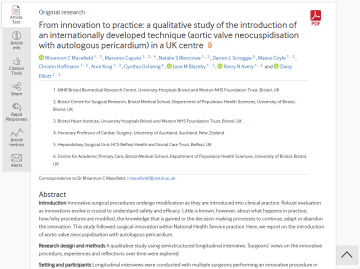
From innovation to practice: a qualitative study of the introduction of an internationally developed technique (aortic valve neocuspidisation with autologous pericardium) in a UK centre
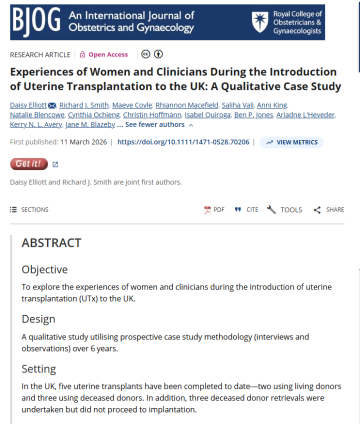
Experiences of Women and Clinicians During the Introduction of Uterine Transplantation to the UK: A Qualitative Case Study
