Insights from the UK’s first womb transplants
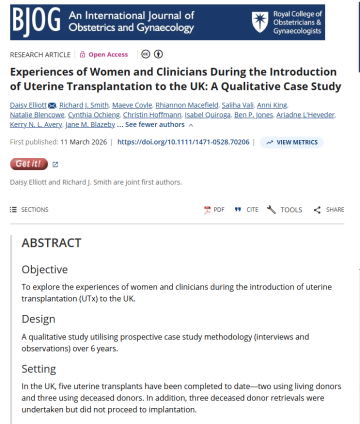
A new NIHR Bristol BRC study has captured the experiences of women and clinicians involved in the first uterine transplants (UTx) to take place in the UK. The research team, who are part of the NIHR Bristol BRC Surgical and Orthopaedic (SOI) Innovation theme used a range of qualitative methods to study the introduction of UTx over a period of 6 years.
The study included:
- Interviewing the clinical team after each operation
- Audio‑recording healthcare consultations between clinical teams and patients
- Conducting follow‑up interviews with women who had undergone the groundbreaking procedure
Researchers established that both women and clinicians faced difficult choices and uncertainties associated with the procedure. This included weighing up the risks of surgery and deciding between using a living or deceased donor.
Their work highlights how qualitative research methods captured important technical developments in the operating theatre. It also identified strategies for navigating informed consent when outcomes are uncertain and risks are high.
Professor Jane Blazeby, SOI theme co‑lead, said:
“Using interviews and observations during the first womb transplants in the UK allowed us to gain critical insights into how these procedures were being introduced.”
This work forms part of the Lotus study.
To date the team have studied a range of surgical innovations, including novel cardiac surgery, robotic procedures, and an innovative way of delivering chemotherapy as spray via keyhole surgery.
Dr Daisy Elliott, Senior Research Fellow and corresponding author, said:
“We often know little about how new operations enter NHS practice – how patients make decisions, how clinicians navigate uncertainty, and how procedures evolve over time.
“This paper shows the value of in‑depth qualitative methods in revealing how surgical innovation unfolds, offering insights that would otherwise remain hidden.
“We are enormously grateful to the clinical team for their openness and collaboration over more than six years, and to the women who shared their experiences so generously.”
Find out more
Experiences of Women and Clinicians During the Introduction of Uterine Transplantation to the UK: A Qualitative Case Study - published in BJOG